
March is National Reading Month, which makes it the perfect time to highlight one of the simplest and most powerful activities families can do at home: reading together. Story time doesn’t just build a love of books. It can also support communication, attention, motor skills, and social development.
Books naturally create opportunities to support skills addressed in speech therapy, occupational therapy, and ABA. With a few small adjustments, reading together can become a fun way to support your child’s development across multiple areas.
Pause and Let Your Child Participate
Instead of reading straight through the story, pause occasionally and give your child a chance to participate. They might finish a familiar phrase, label a picture, point to something on the page, or imitate a sound.
These small pauses encourage children to actively engage with the story and practice communication rather than simply listening.
Ask Questions About the Story
Asking questions while you read helps children think about the story and express their ideas. Try simple questions like “What do you see?” “What is the character doing?” or “What do you think will happen next?”
For younger children, simple choices like “Is that a cat or a dog?” can make it easier for them to respond and participate.
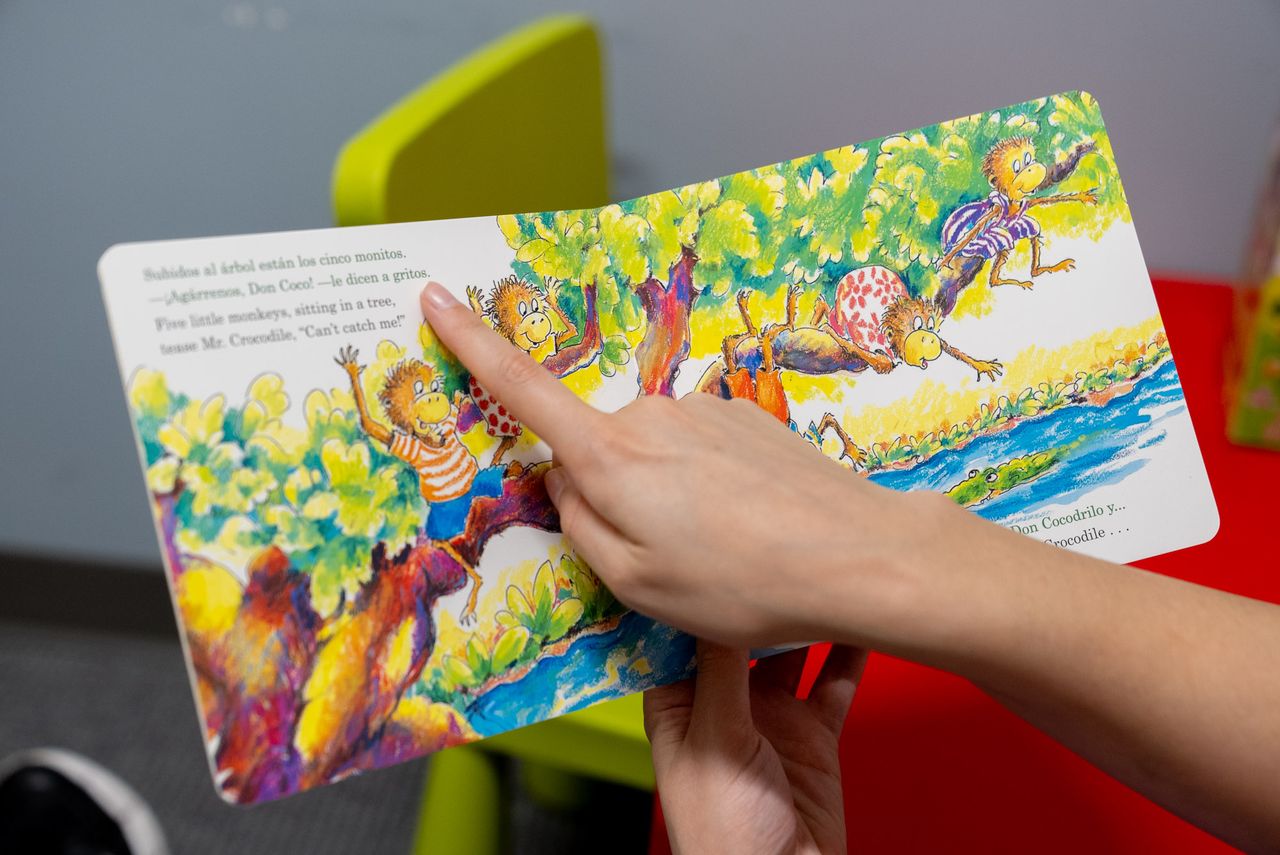
Let Your Child Turn the Pages
Let your child hold the book, turn the pages, and point to pictures. Even these small actions help build coordination and fine motor skills that support writing, drawing, and everyday tasks.
Books with flaps, textures, or interactive elements can make this even more engaging.
Talk About Feelings and Social Situations
Stories are full of opportunities to talk about emotions and social situations. You might ask questions like “Why do you think the character looks sad?” or “What could they do to help their friend?”
Talking through these moments helps children better understand emotions, social cues, and how people interact with one another.
Follow Your Child’s Lead
The goal isn’t to read every word on every page. If your child wants to linger on one picture, make sound effects, or skip around in the book, that’s okay. Following their interests keeps reading fun and encourages them to stay engaged.
When children enjoy story time, they are much more likely to stay involved and practice the skills that support learning and development.
Reading together for just a few minutes each day can support language, motor skills, attention, and social learning. During National Reading Month, consider adding a few extra story time moments to your routine. Those shared pages can become meaningful opportunities to help your child grow while enjoying time together.
If you ever have questions about your child’s communication, motor skills, or development, our team at The Speech and Language Center is here to help.